My favorite rides: Arreau-Aspin-Tourmalet

2010 June 14
tags: ,
by cathy

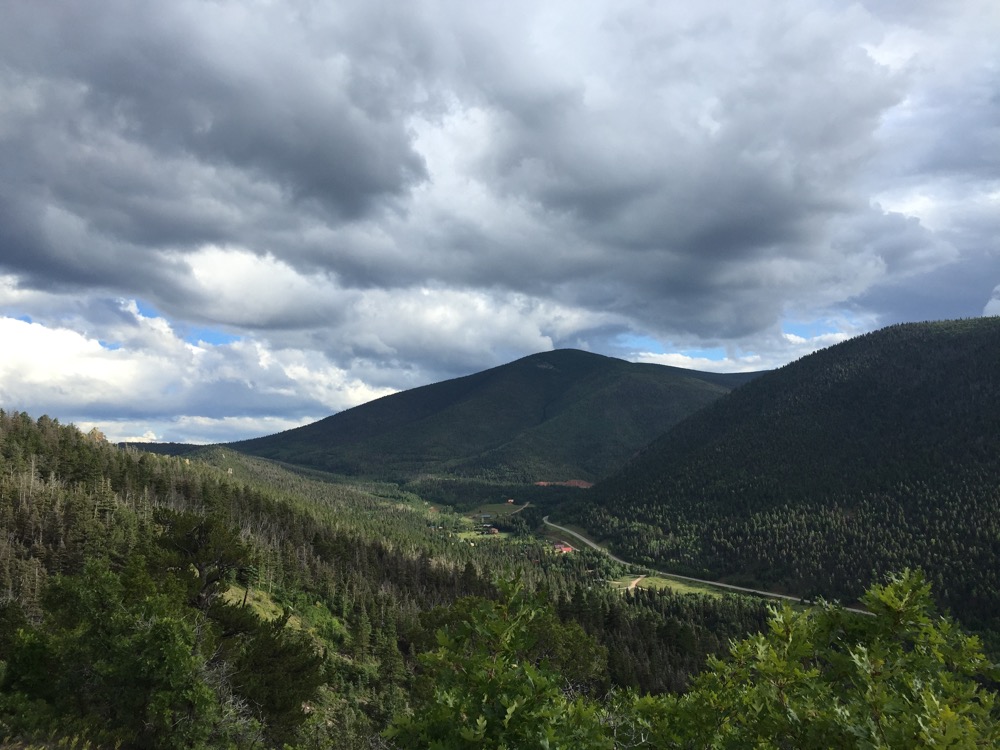
This is an out-and-back route that starts in Arreau, France, crosses over the Col d’Aspin, then climbs to the top of the Col du Tourmalet and turns around back to Arreau.

Dist: 54 mi / 86 km
Ascent: 8400 ft / 2500m
(Note: MapMyRide.com tends to underestimate ascent and steepness of climbs. The longer the ride, the more it underestimates. This is a fairly short route so the estimate is probably reasonably close.)

Pros:
- It’s in the Pyrenees on a roads that have many times been part of the route of the Tour de France.
- Good pavement.
- Good climbs.
- Beautiful rural scenery and picturesque French towns.
- French bicycling road signs which give regular statistics about the upcoming grade.

Cons:
- I can’t think of any negatives about this ride, but it is rural France, so depending on time of day, time of year, etc., it may be difficult to find replenishment on the route. Plan accordingly.


Solo Run Across America

2010 June 10
by cathy

My friend Mike Ehredt is running 4,300 miles across the U.S. pushing a baby jogger to honor and remember service members lost in Iraq. He began his journey in Oregon and is now close to the Idaho-Wyoming border. Check out his website, Project America Run.

2010 24 Hours of ERock

2010 June 7
by cathy

It’s no secret that I’m not much of a mountain biker. After last year’s 24 Hour of Grand Targhee I said, “No more mountain bike races! … with one exception ERock!” 24 Hours of ERock is only a couple hours from home and I really enjoyed it last year. The event is relatively low key. The other riders are all super-friendly and supportive. The atmosphere reminds me of a road bike ultra, with a lot more dust and loud music.

Last year’s ERock was the first race of any kind I’d ever won so it was odd for me to be in the position of having other racers wanting to “beat” me. While I do prefer winning to not, I always set my goals for a race independent of other riders. I don’t want to feel like my goal is out-of-reach before the start if say, Kristin Armstrong decides to come out of retirement and try her legs at ultracycling. It’s important for me to have a goal that is both challenging and attainable. I need a target that can motivate me even if I’m out classed by the field or if no other riders show up. I’d finished 25 laps in 2009. My goal for this year was 29 laps…actually it was originally 27, then 28, then a few weeks before the race I thought I had an outside chance at getting 29.

The women’s field was much stronger this year than last. Six solo women started, as opposed to four in 2009. The sixth place woman rode one more lap than the second place woman in 2009. Optic Nerve sponsored XC rider, Kim Godfrey, finished second. Elizabeth Boese who’s started focusing on 12 and 24 hour MTB races and posting some good results, finished third. I was also impressed with the 4th place woman, who rode continuously for 24 hours with only short breaks, and finished her last lap during the last hour. I have great respect for someone with the inner will to get out there for one final lap when it makes no difference in the overall results. I’ve only managed it once in five 24-hour MTB races.

The race begins with a Le Mans start. That means running. If I could still run without hip pain I’d probably not be biking so much, and if I wanted to run with a bike I’d do cyclocross. I tried to line up out-of-the-way, as close to the front as possible, planning to run/walk only fast enough to get me to the bike mounting area not too far behind the next-to-last racer.

The first few laps I was going too hard and was trying to ratchet back my effort on the climb. After a couple laps, Jen told me I was in second by a few minutes, and I said something brilliant like, “I’m not going to catch her by riding faster.” Meaning I didn’t think I had as much speed as some of the other women so I’d need to make up time in other ways. I was pretty surprised when I passed Elizabeth after a few more laps. I think it was all due to Jen, who was crewing me. It was so windy last year that we’d decided not to bother with a tent and crew from her s.u.v. in the parking lot. She set an alarm to meet me beside the trail after each lap with fresh batteries and bottles and we were doing fairly fast pit stops. I have no doubt that Jen’s work during the race was worth at least two laps.

I’ve done most of my training on my road bike this year, which meant I had plenty of pedal revolutions in my legs, but almost no time on my mountain bike. I think my longest mountain bike ride since Targhee, last August, was 1.5 hours. And I’d only ridden that long once. Halfway through the race my butt was uncomfortable, but my hands and arms were hurting so much I did not see how I’d be able to continue for 12 more hours. Near the end of the race, I was reminded of ultrarunner Ann Trason’s quote, “It hurts up to a point and then it doesn’t get any worse.” My hands and arms still hurt, but not any worse. And my neck and shoulders felt a little better.

By the time I’d finished 21 laps, about 16 hours into the race, I’d built up a bit of a lead, and it was a good thing. During the 21st lap I’d started feeling very dizzy and by the end of the lap I felt like I was going to pass out. I signaled Jen to meet me at the car. I laid down and tried to figure out what was wrong. My symptoms were similar to the time I’d gotten hyponatremia at Barr Trail Mountain Race (how I managed that during a 13 mile run is another story) so I thought I might have had too much water. Then Jen said, “I’ve only used one gallon of water and a half bag of ice.” I hadn’t drunk all of that. That meant I’d had less than 10 ounces of fluid per hour. Even for me, mostly riding at night, that was not enough water. I drank some plain water, took a couple more Endurolytes, and felt a little better after a few minutes. After about a 30 minute break, I headed back out, but I was very conscious of keeping my effort relaxed and drinking lots of fluid. I felt better, but I had to stop and pee on every one of my last seven laps.

Jen had more confidence than I. I didn’t know until after the race that after my first lap she’d predicted on her Facebook page that I’d meet my goal of 29 laps. Between laps 16 and 25 I thought there was no way I’d come close. I was just slogging away, one lap at a time.

I’m guessing this really was my last mountain bike race. If for no other reason than I don’t expect my 20 year-old Kona with the patched together Marzocchi Z2 Bomber to survive another 24-hour race. In fact I was pretty surprised to get through this race with no major mechanical failures.

ERock is a fun, smoothly organized event. I was especially happy to see more solo women out there challenging themselves and doing strong rides!

Some good photos of the race by ultrarob. More ERock photos by camrewop.

St. Vrain 600k Brevet

2010 May 24
by cathy

The weather report for Saturday was hot, with winds gusting to 45mph, but as I sat on the curb at 3:30am enjoying the calm, I hoped we might get a few hours of respite from the wind before sunrise. However, by 10 minutes ’til 4am the wind had started to pick up. Ah well. I smiled to myself and gave up my last hope that the forecasters had gotten the wind part wrong.

St. Vrain 600k
starts in Louisville, Colorado, makes a short jaunt east to Brighton, then back to Lyons, up St. Vrain Canyon to Wind River Pass, down to Estes Park, on to Glen Haven, down Big Thompson Canyon, over to Masonville and Horsetooth Reservoir, heads north to Ft. Collins and Wellington, then over to Gilcrest and back to Louisville to finish the first 400k. The last 200k is a northeastern loop from Louisville going through Evans, Kersey, Hudson, and Brighton.

Prior to this my longest brevet was 300k. I’ve finished longer races; Tejas 500 (miles) and Hill Country 600k. The difference is that an ultracycling race includes race support staff and often each racer has a personal support crew. I had crew for both those events. A brevet, on the other hand, is an unsupported ride. Each rider is responsible for understanding where along the route they can resupply and for carrying what they’ll need. If you have a mechanical or physical problem you figure out how to fix it or hitch a ride back to your car … or phone a friend. But if you think it’s inconvenient to ask someone to drive 10 miles to come pick you up, how about 100 miles!? That would not be unusually far for a rider that has to DNF a brevet.

I haven’t been feeling particularly zippy for the past … oh, month maybe, so my plan was to manage my effort and just get through this last of six brevets in six weeks. I was surprised that the little group of riders started fairly conservatively, but I dropped off the back after 30 min or so, still warming up and not wanting to push it on the rollers. The sun was starting to come up as I left Brighton and the westerly ride was beautiful on the green spring morning. As I rolled into Lyons, the wind was just starting to show signs of the predicted ferocity.

It’s a nice, long, gradual climb to Wind River Pass from Lyons. It’s only 40 miles to Estes Park, and two water bottles will often get me twice that far. I hadn’t planned on the wind increasing my thirst, or calculated the extra time the 4000′ climb would add. All of which meant that 14 miles out of Lyons I was already very low on water. I went off-route at Allenspark hoping for a store, but instead found Crystal Springs! The refreshment was worth the extra half mile. I filled my bottles with ice-cold water and drank another half bottle while I was standing there.

I’d never been to Estes Park before and dropping down into the valley from the south is beautiful! I stopped at the KOA again for more water. Then headed across the valley for the ride down Devil’s Gulch Switchbacks. This entire stretch through Glen Haven, Drake and out Big Thompson Canyon is very scenic. There was A LOT of traffic, but I’m guessing it was a little heavier than usual because another road between Drake and Estes Park was closed.

I was surprised when the route took us by a little reservoir we passed during the Stove Prairie 200k. I had no idea it was nearby. I was starting to feel pretty warm and was looking forward to stopping in Masonville for some nice cold water and ice. Unfortunately all the water in Masonville was warm and there was no ice, but I refilled my bottles and soaked my shirt and headband for some extra cooling and headed on for Horsetooth Dam.

After another stop in Ft. Collins, for yet more water. I have to say the ride got a lot less fun for me after Ft. Collins. I began to question why I was out there and why I’d ever want to do another long ride again! For one thing the wind was stronger out on the plains. And the howling wind, whether from the front, side, or rear, was abrading my nerves. And, while the beauty of the green fields was not lost on me, passing stinky feedlot after stinky feedlot quickly gets tiring (and depressing) to this vegan.

I’d planned to make a quick turnaround after the 400k, but when I got back to my hotel room about 9:30pm, I was too exhausted and sleepy to do anything more than take a shower and go to bed. I thought about DNF’ing, but remembered all the times I’ve wondered why someone would DNF when they still have 10 hours (or, in this case, over 20 hours) to finish, and decided not to make any decision about the last 200k. After I’d been lying in bed (not much sleeping) for about 90 min, I felt refreshed and suddenly motivated to get out there and knock out the rest of the ride.

Back out on the road it was nice. There was little traffic and the wind was calm. I made some routing errors and rode a few extra miles; a combination of not being able to read the tiny print on the cue sheet well and not seeing some road signs in the dark. I’d underdressed and stopped in Miliken to get some coffee and get out of the cold for a few minutes. I put on every stitch of clothing I had with me, unsure if it would be enough; amused at myself because I’m usually so afraid of being cold that I carry enough extra clothing to keep myself and two other people warm. Once I got moving again the light jacket with hood seemed to be just right. By the time I got to Kersey at 4:30am the sky was already starting to lighten. More green fields, more stinky feedlots, a fun descent into Erie, up the rollers to South Boulder Road, across Via Appia and check “done” next to 600k brevet.

Valles Caldera 200k

2010 May 17
by cathy

This past weekend I rode the New Mexico Valles Caldera 200k brevet. We had nice, if a bit cooler than normal, weather. A few threatening clouds, but no precipitation. If you like rural routes and mountain scenery this is an absolutely beautiful ride! About 123 miles of the 127 mile route you’re riding through public lands. You’ll also enjoy this ride if you’re a climber. It has over 11,000 feet of ascent. If you are particular about road surface this may not be the ride for you. Most of the route has frost cracks at regular intervals. Also, it’s probably best to do this ride during the middle of the week if you have the option. On a beautiful weekend day, there are a lot of city dwellers that want to get out of town and enjoy the beautiful scenery and multiple recreation opportunities.

If you get the chance ride a Flèche

2010 May 11
tags: ,
by cathy

This past weekend was the Front Range Flèche. A Flèche in randonneuring terms, is a non-competitive, team cycling event. Each team rides a minimum of 360km in 24 hours. Team captains submit a route for their team. All teams ride different routes finishing at the same time and location. The format is based on the Audax Club Parisien (ACP) Flèche Velocio which originally started in Paris and finished in Provence. More fine print about USA Flèche rules at the RUSA website.

While you will certainly never hear me complain about riding solo, riding the Flèche was a blast! You’d think there aren’t that many people who enjoy riding their bikes all day AND night, but right in this photo, are represented 15 such crazy people.

Our team of five started by heading up to Stove Prairie from the south, down Poudre Canyon and out to the plains. We had a nice dinner/sleep break from about midnight to 5AM. And finished, riding into Lyons, with views of Longs Peak, and back through Hygiene to Louisville. We had nice weather. A little overcast much of Saturday, and a sunny, clear morning on Sunday.

Installing full fenders

2010 May 5
tags: ,
by cathy

In one of my last architecture class, “Professional Practice” I think, we were given a rule of thumb for estimating the time needed to complete a task; multiple the time you think it will take by three. If you are installing full fenders on a road bike that was not designed for fenders double that (six times your first guess) and you should be close. For starters, allow at least one day for the job.

Why did I want full fenders? To tell the truth I asked myself that a number of times while trying to get these set up.

The SKS Race Blades I’ve used thus far are pretty good. They take about 15 minutes to install the first time, about 1 minute after that. They pretty much eliminate the stripe down my back. They reduce the amount of water in my shoes and road spray on my water bottles during rain and when riding on wet roads or through puddles. Basically the Race Blades helped enough to make me realize how great real fenders could be. I wanted fenders that would eliminate water from coming off my tire and dumping in my shoes and significantly reduce road spray for people riding behind me. The question is will the improvement in water and mud management outweigh the hassle of installation.

I purchased fenders from Velo Orange. I wanted the longest fenders available in a 35-37mm width, which was the limit of my brake calipers, fork and seat stays. I had the minimum clearance above my tire recommended by Velo Orange; 9-10mm. The problem is that VO’s minimum is an absolute minimum and doesn’t necessarily apply to their standard installation kit.

Let’s start with the front fender. VO ships fenders with a daruma bolt to mount the front. It (theoretically) slides up through the fork crown and over the front brake mounting bolt. After clearing the crud out of the hole in my fork crown the daruma bolt still would not fit. I ended up pulling the stem and dropping the bolt down through the steerer tube.

OK. So when the daruma bolt is properly installed on the brake mounting bolt it hangs about 13mm below the bottom of the fork crown … so much for 10mm clearance.

I cut down the daruma bolt about 5mm. So now I’m back to 8mm intruding into my 10mm clearance. But you’re still supposed to get a metal washer, thick rubber washer, fender, metal/leather washer, and nut onto that bolt. I replaced the thick rubber washer with a thin one, eliminated the other two washers and ground about 4mm off the thickness of the nut. With everything in place the nut sits flush with the end of the bolt. The nut has a greater diameter than the bolt (of course) so it effectively extends farther down. Which leaves about 1mm of clearance between my tire and the daruma bolt/nut.

With a sliding bracket and Sheldon’s fender nuts to mount the rear fender I thought it would be a breeze. The 36mm fenders are supposed to accommodate tires up to 27mm width. My tires are 25mm … should be lots of room. In actuality the sliding bracket significantly reduces the range of vertical adjustment and the available width of the fender. Unless it is perfectly centered my tire rubs on one side or another.

I expected to have a problem because I have no chainstay bridge, but the fender is very solid in that area without any attachment. I just need a piece of thick plastic tape to prevent any problems from occuring where the fender touches the front derailleur mount.

So I finally got these things on with no rubbing. I am not going to spend more time worrying about perfect fender line. I haven’t trimmed the fender stays yet. I’ll wait until I’ve accumulated some miles and am sure the length is ok. And I’m still planning to add a Planet Bike mud flap on the back. I have some worries about the tiny clearances between my tires and the nuts protruding into the under-fender space and what will happen if there if a little sand or mud on my tire. I’ll let you know how it goes.

fenders-1    fenders-2

Horsetooth – Stove Prairie 200k

2010 May 3
by cathy

Saturday I rode Rocky Mountain Cycling Club’s Stove Prairie 200k Brevet. I guess I’m going to have to stop using superlatives like “one of the best routes I’ve ridden” because there are just so many beautiful rides to do. Stove Prairie is one! And with the exception of a few minutes riding next to Horsetooth Reservoir, the weather was excellent.

I have to admit that with “prairie” in the ride name I wasn’t expecting much scenery and I wasn’t expecting much climbing. I was wrong on both. Almost as soon as we left Berthoud the route went past beautiful farms, gentle hills, and rivers that were only a teaser for what was to come.

We worked our way up and down and around Horsetooth Reservoir with a few nice, short, steeper climbs. Towards the end of the reservoir loop we encountered wind gusts from random directions. Fortunately the wind wasn’t too strong; the strongest gusts probably low 20’s mph, so it was just a matter of relaxing, slowing down to a comfortable speed, and staying far enough from the edge of the road to avoid being blown off by a gust from the left. The random wind ended after we rolled down from the reservoir and soon we were at CP2, Vern’s Store in LaPorte.

From there the route takes a long, gradual climb up Poudre Canyon. The river and the canyon are beautiful; definitely worth a bike ride or car trip! The pine forest here still seems healthy compared to the forest near my house and other parts of Colorado.

You could consider the climb up Poudre Canyon a warm-up for the real climbing, from Mishiwaka to Stove Prairie. It’s about 5 miles from the intersection of Highway 14 and Road 27 to Stove Prairie. Because I was a little tired from hanging onto John Ellis’ wheel coming up Poudre Canyon and because I wasn’t sure how long or hard the climb would be, I held back a little and enjoyed the scenery. There’s a stream running beside the road and the forest is pretty close on both sides most of the way up. The climb reminded me of the south side of Cuchara Pass from North Lake; several steep pitches interspersed with flatter sections and even a down hill section before the last mile to the top.

From the top of Stove Prairie the miles went by pretty quickly … especially the first 23 miles to CP4. There were several steep descents on the downhill side of Stove Prairie and more beautiful scenery. After CP4 the route was flatter, though still downhill overall. We rode past lots of horses enjoying green pastures on the way back to Berthoud and soon after we were finished.

Wish I’d gotten some photos to post, but you’ll just have to go see it for yourself!

If you’ve want to give randonneuring a try Rocky Mountain Cycling Club is a great place to start. They schedule many brevets (200-1200k) and populaires (around 100k). Their rides are usually very well attended with lots of experienced, friendly riders willing to answer newbie questions.

“Brevet” is French for cold, windy bike ride

2010 April 26
by cathy

I wish I could take credit for the title of this post, but I’m just repeating the words of another of the six Malpais 300k riders last Saturday. I’m infrequently that original, and would in any case, add “wet” to cold and windy, since that has as often as not, been my experience.

It was a perfect day in New Mexico; sunny and dry, with few clouds in the sky and a high of 63 degrees. A perfect day that is, if you watched from your window and never stepped outside. The NOAA three day, hourly history for Saturday between 6am-8pm, reports that winds in the area averaged 20-29mph, with gusts from 26-40mph. Mercifully, if anything can be merciful about fighting the wind for 12 hours, it was blowing from one direction. (In fact, I’m starting to wonder if I live in one of the few places in the world where the wind commonly blasts your right side, only to blast your left the next second.)

As usual, with the exception of the uncontrollable weather, it’s difficult to fault an NM Brevet. It is probably getting boring to read how fabulous the ride coordinators and volunteers are, but they are. Exceptional!! As is the Malpais Route! About 193 miles of the 195 miles were on rural roads. There were many stretches where fewer than one vehicle per mile passed. I would rank it among the most beautiful rides I’ve done. If one is fond of the desert southwest it’s worth a trip to do this ride.

Regardless of the wind, I wasn’t having a superb day on the bike, but I managed to make my way to the finish before dark. I was certainly glad for the short ride to my hotel room (there are several hotels within 1/4 mile of the start/finish), a warm shower and bed.

Good things about wind

2010 April 13
by cathy

Wind …

  • flies kites
  • sails boats
  • makes music
  • pumps water
  • provides energy
  • sows seeds
  • pollinates plants
  • blows away houseflies and other pests
  • the #1 good thing — Wind dries out mud!